
How to Choose the Right Pergola Side System: Zip Screens, Glass Doors or Privacy Louvers?

A modern aluminum pergola does more than provide overhead shade. The right side system can help you manage low-angle sunlight, improve privacy, reduce wind exposure, and make your outdoor living area more comfortable.
But which option should you choose: motorized zip screens, sliding glass doors, or aluminum privacy louvers?
The answer depends on how you use your outdoor space, the weather conditions around your property, and how open or enclosed you want your pergola to feel.
In this guide, we compare three popular pergola side systems, explain their advantages and limitations, and help you find the right configuration for your home or commercial project.
Quick answer:
- Zip screens: Best for flexible shade, adjustable privacy, and a more open outdoor feel.
- Sliding glass doors: Best for maintaining clear views while creating a more enclosed outdoor living area.
- Privacy louvers: Best for fixed privacy, filtered light, ventilation, and a modern architectural appearance.
You do not necessarily need to choose just one. Combining different systems on different sides of your pergola can often deliver a more practical solution.

1. Why Does Your Pergola Need a Side System?
A louvered pergola roof helps control sunlight and overhead weather exposure, but it cannot address every condition around the perimeter.
Low-angle sunlight can enter from the side in the morning or late afternoon. Wind may blow across an exposed patio. Neighbors or nearby buildings may overlook your seating area. In a commercial setting, you may also want to create a more comfortable dining space without permanently closing it off.
This is where pergola side systems make a difference.
Depending on your needs, a side system can help you:
- Reduce glare and direct sunlight.
- Improve privacy from neighboring properties.
- Reduce wind exposure.
- Preserve garden, pool, or landscape views.
- Create a more sheltered outdoor dining or lounge area.
- Adjust the space as the weather and your activities change.
Before choosing a product, identify the main problem you want to solve. A side that needs afternoon shade may require a different solution from one that faces a busy street or an exposed garden.
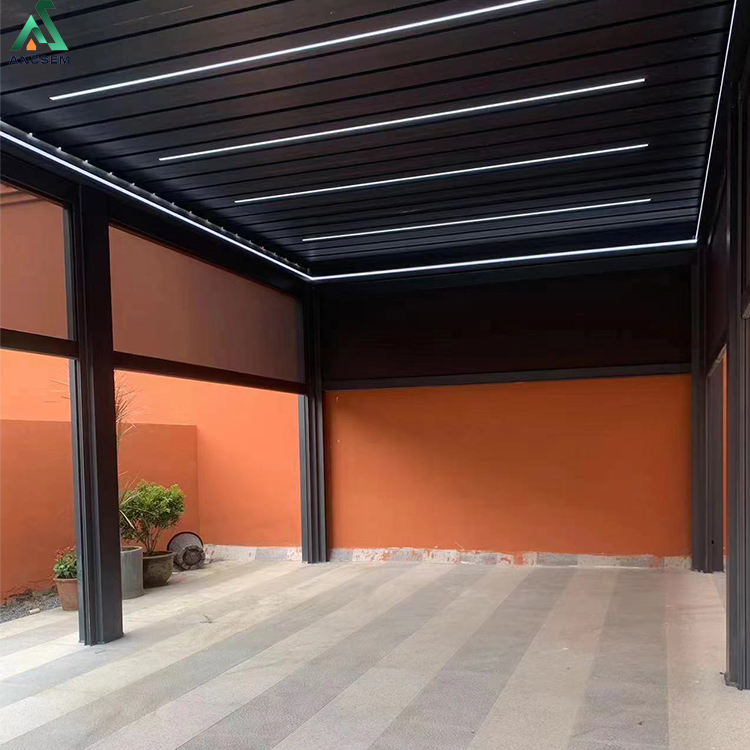
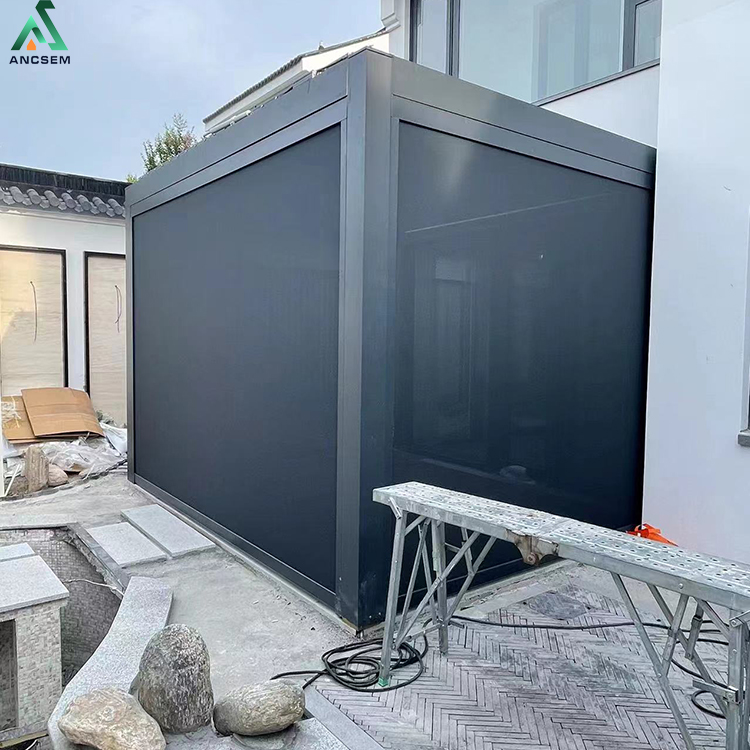
2. Pergola Zip Screens: Flexible Shade and Privacy
A pergola zip screen is a retractable vertical screen that runs along guided side tracks. Depending on the design, it can be operated by a motor and controlled using a remote or compatible smart control system.
When the screen is raised, the side remains open. When lowered, the screen creates a more sheltered boundary while helping manage sunlight, visibility, and airflow.
Advantages of Pergola Zip Screens
Flexible sun control
Zip screens can help reduce glare and direct sunlight entering from the side. The result depends on the fabric’s openness, color, and light-transmission properties.
Adjustable privacy
Depending on the selected fabric and lighting conditions, a screen can reduce visibility into the pergola during the day. However, some fabrics provide less privacy at night when the pergola is illuminated.
A more open outdoor feel
Compared with permanent walls, retractable screens allow you to open the space whenever you want more airflow and an unobstructed view.
Convenient operation
Motorized systems make it easy to raise or lower the screen. Some configurations may support smart controls or automation, depending on the equipment selected.
What Should You Consider?
Zip screens are not a universal replacement for walls or glazing.
Their performance depends on the fabric, guide-track design, installation, and exposure to wind and rain. Mesh fabrics generally prioritize airflow and visibility, while denser fabrics may offer greater shading and privacy.
A zip screen should not automatically be assumed to provide complete waterproofing or withstand every wind condition. Always check the system’s tested performance and follow the manufacturer’s operating instructions.
Best Applications
- Villa patios and garden pergolas.
- Rooftop terraces where flexible shade is important.
- Outdoor dining areas that need adjustable screening.
- Pergolas where permanent walls would feel too restrictive.
3. Pergola Sliding Glass Doors: Views and a More Enclosed Space
Sliding glass doors are a popular choice for homeowners who want to preserve the view while creating a more sheltered outdoor area.
Depending on the design, the panels may slide along tracks and stack or overlap to open the side. Framed and frameless systems offer different visual appearances, so the right choice depends on the overall design and the selected product.
Advantages of Sliding Glass Doors
Clear outdoor views
Transparent glass helps maintain views of gardens, swimming pools, and surrounding landscapes. This is especially useful for properties where the view is a major part of the outdoor experience.
A more enclosed atmosphere
Glass panels can reduce direct wind exposure and provide a more defined boundary around the pergola. When closed, the space can feel closer to an outdoor room.
Flexible access
Sliding panels can be opened when conditions are comfortable and closed when additional shelter is needed.
A premium architectural appearance
Glass complements modern villas, contemporary patios, hotels, and other projects where a clean, refined appearance is important.
What Should You Consider?
Glass doors are usually heavier and more substantial than fabric screens. The supporting structure, tracks, drainage, hardware, and installation must be suitable for the selected system.
Glass also requires regular cleaning, particularly in areas exposed to dust, rain marks, or coastal conditions.
Most importantly, clear glass does not provide meaningful visual privacy by itself. If your pergola faces neighboring windows or a busy walkway, you may need a screen, privacy louver, or another suitable privacy solution.
Glass enclosure systems also vary in their weather performance. Do not assume that every sliding glass installation creates a fully weather-sealed, insulated indoor room.
Best Applications
- Luxury villas and landscaped patios.
- Poolside pergolas where views should remain unobstructed.
- Outdoor lounges and dining areas that need additional shelter.
- Hospitality projects seeking a more enclosed, refined appearance.
Safety note: Choose glass and hardware appropriate for the installation and local building requirements. For example, Singapore’s Building and Construction Authority provides guidance on glass safety in building applications. Requirements differ by location and installation type.
External reference: Building and Construction Authority — Approved Document.

4. Pergola Privacy Louvers: Permanent Privacy with Filtered Light
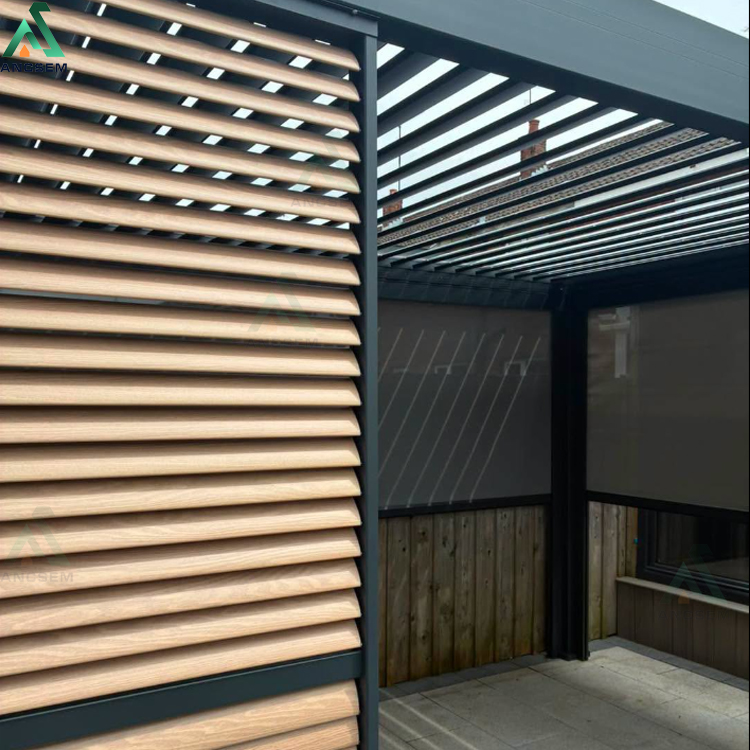
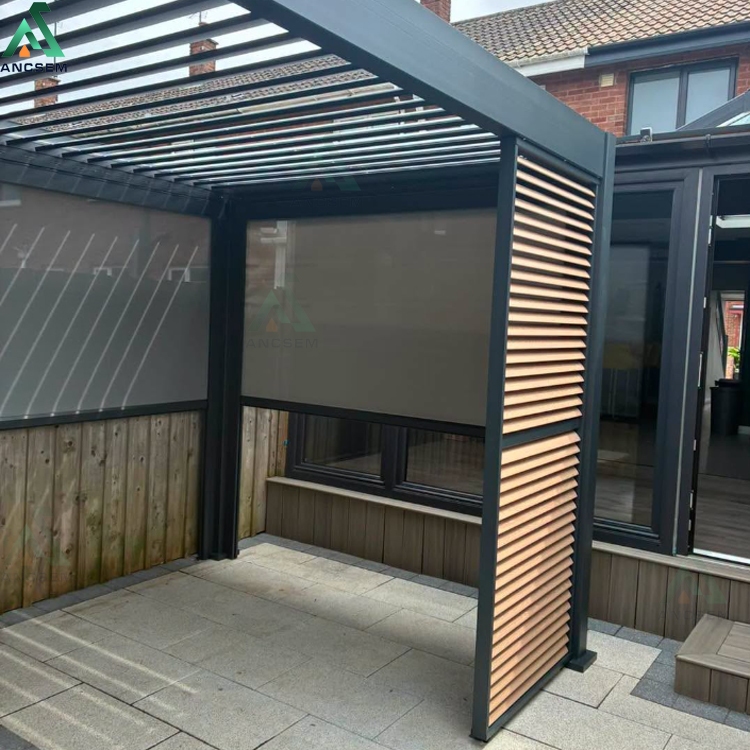
Aluminum privacy louvers are fixed or adjustable slats installed vertically or horizontally along the sides of a pergola.
Unlike retractable screens or sliding glass panels, fixed privacy louvers generally remain in place. Their spacing, angle, orientation, and profile design determine how much visibility, airflow, and light pass through the system.
Advantages of Privacy Louvers
Improved visual privacy
Louvers can help block direct sightlines from neighboring properties, roads, or other areas around your home. The level of privacy depends on the louver angle, spacing, and viewing direction.
Filtered light and airflow
The gaps between the slats allow air and some light to pass through. This can create a more comfortable balance between privacy and openness than a completely solid wall.
A coordinated architectural design
Aluminum louvers can complement the pergola frame and create a consistent, contemporary appearance.
Low-maintenance materials
Powder-coated aluminum is suitable for many outdoor applications because it resists rust and is relatively easy to clean. Actual durability depends on the alloy, coating quality, installation, and local environment.
What Should You Consider?
Fixed privacy louvers cannot be opened or retracted unless you select an adjustable design.
They can also reduce the view from certain angles, and the degree of wind screening varies with the slat geometry and spacing. Do not assume that a louvered side provides complete privacy or acts as a structural wind barrier under every condition.
If you want to change between an open view and a private setting throughout the day, a retractable screen may be more suitable.
Best Applications
- Villas with close neighboring properties.
- Outdoor dining areas that need a more defined boundary.
- Poolside lounges where privacy is important.
- Modern architectural projects that use aluminum slats as a design feature.
5. Zip Screens vs. Glass Doors vs. Privacy Louvers: Comparison
Each pergola side system serves a different purpose. The following table provides a practical starting point for choosing the right option.
| Feature | Zip Screens | Sliding Glass Doors | Privacy Louvers |
|---|---|---|---|
| Main purpose | Flexible shade and screening | Transparent enclosure | Fixed or adjustable privacy |
| Visual privacy | Depends on fabric and lighting | Low with clear glass | Depends on slat angle and spacing |
| View preservation | Depends on fabric | Excellent with clear glass | Partially obstructed |
| Airflow | Depends on fabric and screen position | Limited when closed | Depends on slat spacing |
| Retractable or movable | Usually retractable | Sliding panels | Fixed or adjustable, depending on design |
| Wind protection | System- and fabric-dependent | System-dependent | Geometry- and exposure-dependent |
| Rain protection | Depends on fabric and system design | Depends on seals and installation | Not generally a complete rain barrier |
| Maintenance | Fabric and tracks need care | Glass, tracks, and hardware need care | Usually straightforward surface cleaning |
| Typical design style | Minimal and flexible | Refined and transparent | Architectural and private |
No single system is best in every situation. The most suitable choice depends on your climate, the orientation of the pergola, the amount of privacy you need, and how frequently you want to open or close the sides.
6. How to Choose the Right Pergola Side System
Before making a decision, consider these five factors.
1. Privacy Requirements
Start by looking at the surrounding properties and identifying the actual sightlines.
If you want flexible screening that can disappear when not needed, consider zip screens.
If you need more permanent privacy, aluminum louvers may be the better choice.
If preserving an open view is more important than blocking visibility, sliding glass doors may be preferable.
2. Sunlight and Wind Exposure
Observe how sunlight enters your outdoor space at different times of day. Low-angle afternoon sun can be particularly uncomfortable on a west-facing patio.
Also consider the direction and intensity of prevailing winds. A screen, glass enclosure, or louvered panel will respond differently depending on its construction and installation.
For exposed sites, ask the supplier for the system’s applicable performance data and operating limitations rather than relying on general product descriptions.
3. How You Use the Space
A family patio, a poolside lounge, and a restaurant terrace do not necessarily need the same configuration.
For example, a restaurant may benefit from retractable screens that can be raised during pleasant weather. A villa owner who values an uninterrupted pool view may prefer sliding glass. A private garden facing neighboring homes may benefit from privacy louvers.
Think about the activities taking place under the pergola before choosing the side system.
4. Budget and Maintenance
The overall cost depends on the dimensions, number of enclosed sides, materials, hardware, control options, and installation requirements.
In general, compare complete configurations rather than the price of a single accessory. A motorized screen and a sliding glass system are different products with different structural and maintenance requirements.
Ask suppliers to specify what is included in the quotation, such as motors, tracks, glazing, controls, installation, and shipping.
5. Compatibility with Your Pergola
Not every side accessory fits every pergola model.
Before ordering, confirm:
- The pergola model and frame dimensions.
- The width and height of each side.
- Whether the system is designed for your specific frame.
- Motor and control compatibility, where applicable.
- Required fixing points and drainage arrangements.
- Local building requirements and installation limitations.
If you are planning a new pergola, deciding on the side systems early can make it easier to coordinate the structure, accessories, wiring, and installation.


7. Can You Combine Different Pergola Side Systems?
Yes. In many projects, combining systems is a practical way to address different conditions around the same pergola.
Each side can serve a different purpose.
8. Why Plan Your Pergola Side Systems Before Installation?
Side systems affect more than the appearance of a pergola. They can also influence the frame configuration, fixing points, motor wiring, access routes, and drainage details.
Planning ahead helps you:
- Match each side to its intended purpose.
- Confirm product compatibility before production.
- Coordinate accessories and electrical components.
- Avoid unnecessary modifications during installation.
- Prepare a clearer budget and project specification.
For distributors, contractors, and project buyers, this is also an opportunity to discuss different configurations with the manufacturer before placing an order.
A well-planned pergola does not need to enclose every side. Sometimes one screen, one glass enclosure, or one privacy panel is enough to make the space more comfortable.
Conclusion: Which Pergola Side System Is Right for You?
The best pergola side system depends on what matters most in your outdoor space.
- Choose zip screens if you want flexible shade, adjustable screening, and an open feel when the screens are raised.
- Choose sliding glass doors if you want to preserve views while creating a more sheltered outdoor area.
- Choose privacy louvers if you want a defined architectural look, filtered light, and more permanent screening.
You can also combine different systems to suit the conditions on each side of your pergola.
At ANCSEM, we provide aluminum pergola solutions with a range of side-system options for residential and commercial projects. The right configuration starts with understanding your space, your preferred appearance, and the conditions the pergola needs to handle.
Planning a pergola project?
Tell us about your project, including the pergola dimensions, preferred side systems, installation location, and any specific privacy or weather requirements.
Our team can help you explore a suitable configuration for your project.